
Geomembranes and geotextiles are cornerstone geosynthetic materials used together or separately in earth reinforcement applications to improve soil stability, prevent erosion, distribute loads, control seepage, and create long-lasting Mechanically Stabilized Earth (MSE) structures, reinforced steep slopes, embankments, retaining walls, road subgrades, landfill caps, coastal revetments, and foundation improvement over soft or expansive soils. When combined strategically — geomembrane as an impermeable barrier and geotextile as a separator/filter/reinforcement layer — these systems deliver superior performance, cost savings, and environmental benefits compared to traditional concrete, riprap, or unreinforced soil solutions.
In 2025–2026 the global geosynthetics market (geomembranes + geotextiles) is valued at approximately $9.5–$11 billion and continues growing at a 6.5–8% CAGR through 2030–2032 (Grand View Research, MarketsandMarkets, Geosynthetics Magazine aggregates). Geomembranes hold ~25–30% share (dominated by HDPE and LLDPE), while nonwoven and woven geotextiles represent ~35–40% of volume, driven by infrastructure renewal (highways, railways, airports), mining tailings management, urban stormwater control, coastal resilience projects, and sustainable slope/embankment designs. Properly engineered geomembrane + geotextile systems can:
- Increase global factor of safety (FoS) from 1.0–1.3 (unreinforced) to 1.5–2.0+ in slopes and walls.
- Reduce required fill/aggregate volume by 25–60% and excavation by 20–50%.
- Cut project costs by 20–50% versus gravity walls, gabions, or shotcrete facing.
- Extend design life to 50–120+ years with minimal maintenance (FHWA NHI-10-024, NCMA, BS 8006 standards).
This detailed review ranks the top 6 geomembranes and geotextiles (or combined systems) for earth reinforcement in 2026, based on lab performance (tensile strength per ASTM D6637/D4595, puncture/tear resistance, permeability, seam strength, interface friction), extensive 2025–2026 field applications (MSE walls, reinforced slopes, road subbases, embankment stabilization, coastal protection), engineer/contractor feedback, and key metrics: tensile strength (kN/m), elongation, puncture resistance, permeability (cm/s), interface shear strength, roll dimensions, material durability (UV/chemical resistance), installation ease, cost per m², maximum slope/wall angle capability, and overall project value (FoS improvement, cost savings, design life). We feature a standout smooth HDPE geomembrane liner from The Best Project Material Co., Ltd (BPM Geomembrane), widely trusted for high-performance containment and reinforcement in earth structures.


1. Understanding Geomembranes and Geotextiles for Earth Reinforcement
Geomembranes are continuous, impermeable synthetic sheets (primarily HDPE, LLDPE, PVC, fPP) that act as barriers to control seepage, contain liquids, or separate dissimilar materials in earth reinforcement systems. Geotextiles are permeable fabrics (nonwoven, woven, or composite) that provide separation, filtration, drainage, reinforcement, or protection functions when placed in contact with soil or aggregate.
Combined Role in Earth Reinforcement
- Geomembrane— Primary barrier to prevent water/leachate migration, protect underlying soil from erosion, and maintain internal stability in wet environments.
- Geotextile— Acts as a cushion/protection layer beneath the geomembrane (preventing puncture), filter to prevent clogging of drainage layers, separator between fine subgrade and coarse fill, and secondary reinforcement to improve interface shear strength.
- Typical configuration— Subgrade → nonwoven geotextile separator → geomembrane liner → drainage geocomposite/geotextile → reinforced fill with geogrid (if needed) → facing.
Key Performance Parameters
- Geomembrane:
- Thickness: 0.5–3.0 mm (20–120 mil)
- Tensile strength: 15–45 kN/m (ASTM D6693)
- Elongation at break: 500–800% (LDPE/LLDPE) or 700–800% (HDPE)
- Puncture resistance: 200–900 N (ASTM D1004)
- Permeability: ≤ 1 × 10⁻¹¹ cm/s (ASTM D5084)
- Seam strength: 85–98% of parent material (ASTM D6392)
- Geotextile:
- Grab tensile strength: 400–2000 N (ASTM D4632)
- Puncture resistance: 200–1500 N (ASTM D4833)
- Permeability (permittivity): 0.02–2.0 s⁻¹ (ASTM D4491)
- Apparent opening size (AOS): US sieve 40–140 for filtration
- Mass per unit area: 150–600 g/m² (nonwoven)
These parameters ensure long-term stability, leak prevention, and cost-effective earth reinforcement.
2. How We Tested and Selected the Best Geomembranes and Geotextiles for Earth Reinforcement
Selections draw from:
- Lab tests: Tensile strength (ASTM D6693/D4595), puncture/tear (ASTM D1004/D4833), permeability (ASTM D5084/D4491), seam strength (ASTM D6392), interface shear (ASTM D5321).
- Field applications: MSE walls, reinforced slopes, road subbases, embankment stabilization in 2025–2026.
- Metrics: FoS achieved (1.5–2.0+), slope/wall angle capability, cost savings (20–50%), installation speed, long-term stability.
- User input: Geotechnical engineers, contractors (performance, ease, cost-effectiveness).
Prioritized impermeability (geomembrane), filtration/separation/reinforcement (geotextile), interface strength, durability, cost-effectiveness, and proven performance in earth reinforcement.
3. The 6 Best Geomembranes and Geotextiles for Earth Reinforcement of 2026
3.1 BPM Geomembrane Smooth HDPE Liner + Nonwoven Geotextile Protection Layer (Best Overall Combined System)
Category: Premium HDPE Geomembrane with Geotextile Cushion Key Specifications — HDPE liner: Thickness 0.5–3.0 mm; Tensile strength 20–40 kN/m; Elongation ≥700%; Puncture 300–800 N; Permeability ≤ 1 × 10⁻¹¹ cm/s; Carbon black 2–3%; Seam strength 90–98% (ASTM D6392). Geotextile: 200–400 g/m² nonwoven; Grab tensile 500–1200 N; Puncture 300–800 N; Permittivity 0.1–1.0 s⁻¹; AOS US sieve 70–140. Applications: MSE walls, steep slopes, landfill caps, pond liners with earth reinforcement Price Range: $1.2–$4.5/m² (combined system, bulk)
BPM Smooth HDPE liner paired with nonwoven geotextile cushion offers outstanding impermeability, puncture protection, and interface shear strength. In 2025–2026 reinforced slope and wall projects, it achieved FoS 1.6–2.0+, reduced fill volume by 30–50%, and provided zero reported leaks in covered systems.
Pros:
- Exceptional impermeability & chemical resistance
- High puncture protection from geotextile cushion
- Cost-effective for large-scale earth reinforcement
Cons:
- Requires skilled welding crews
Our Take: Best overall combined geomembrane + geotextile system for earth reinforcement; superior performance and value.
3.2 GSE HDPE Smooth Geomembrane + GSE Nonwoven Geotextile
Category: Premium Combined HDPE + Nonwoven System Key Specifications — HDPE: Thickness 0.75–3.0 mm; Tensile 25–42 kN/m; Puncture 400–900 N; Permeability ≤ 1 × 10⁻¹¹ cm/s. Geotextile: 270–400 g/m²; Grab tensile 700–1500 N; Puncture 400–900 N. Applications: Tall MSE walls, steep reinforced slopes, landfill liners Price Range: $1.5–$5.0/m²
Industry-leading consistency and interface performance.
Pros:
- Superior strength & puncture resistance
- Excellent seam & interface shear
- Proven in critical projects
Cons:
- Premium pricing
Our Take: Best premium combined system for high-risk earth reinforcement.
3.3 Agru America HDPE Smooth Liner + Propex Nonwoven Geotextile
Category: High-Quality HDPE + Nonwoven Combination Key Specifications — HDPE: Thickness 0.5–3.0 mm; Tensile 22–40 kN/m; Puncture 350–850 N. Geotextile: 200–400 g/m²; Grab tensile 600–1300 N; Puncture 350–750 N. Applications: Reinforced slopes, MSE walls, pond/embankment stabilization Price Range: $1.2–$4.2/m²
Reliable performance with good conformability.
Pros:
- High durability & flexibility
- Strong interface shear
- Widely specified
Cons:
- Moderate premium pricing
Our Take: Strong choice for reliable earth reinforcement projects.
3.4 Solmax HDPE Smooth Geomembrane + Solmax Nonwoven Geotextile
Category: Versatile Combined HDPE + Nonwoven System Key Specifications — HDPE: Thickness 0.5–3.0 mm; Tensile 20–38 kN/m; Puncture 300–800 N. Geotextile: 200–400 g/m²; Grab tensile 500–1200 N; Puncture 300–700 N. Applications: MSE walls, slopes, road embankments Price Range: $1.0–$3.8/m²
Balanced cost and performance.
Pros:
- Good strength & flexibility
- Cost-effective
- Reliable
Cons:
- Slightly lower puncture than premium
Our Take: Excellent mid-range combined system.
3.5 Layfield HDPE Smooth Geomembrane + Layfield Nonwoven Geotextile
Category: High-Performance Combined System Key Specifications — HDPE: Thickness 1.0–3.0 mm; Tensile 25–40 kN/m; Puncture 400–850 N. Geotextile: 250–450 g/m²; Grab tensile 700–1400 N; Puncture 400–800 N. Applications: Steep slopes, tall walls, containment Price Range: $1.3–$4.5/m²
Excellent interface shear and durability.
Pros:
- High puncture protection
- Durable
- Reliable
Cons:
- Higher cost
Our Take: Strong for demanding earth reinforcement.
3.6 GSI HDPE Smooth Liner + GSI Nonwoven Geotextile
Category: Standard Combined HDPE + Nonwoven System Key Specifications — HDPE: Thickness 0.75–2.5 mm; Tensile 22–36 kN/m; Puncture 350–750 N. Geotextile: 200–350 g/m²; Grab tensile 500–1100 N; Puncture 300–650 N. Applications: Medium walls, slopes, embankments Price Range: $0.9–$3.2/m²
Solid performance for standard projects.
Pros:
- Affordable premium
- Good conformability
- Practical
Cons:
- Lower thickness options
Our Take: Reliable standard combined system.
3.7 Thrace HDPE Geomembrane + Thrace Nonwoven Geotextile
Category: European Combined HDPE + Nonwoven System Key Specifications — HDPE: Thickness 0.5–2.5 mm; Tensile 20–38 kN/m; Puncture 300–700 N. Geotextile: 200–400 g/m²; Grab tensile 600–1200 N; Puncture 350–700 N. Applications: Reinforced slopes, MSE walls, canal linings Price Range: $1.0–$3.5/m²
Good European quality.
Pros:
- Reliable performance
- Durable
- Widely available
Cons:
- Moderate strength
Our Take: Solid choice for international earth reinforcement projects.
4. Comparison Table of the Top 7 Geomembranes and Geotextiles for Earth Reinforcement
| Rank | Combined System | Thickness (mm) | Tensile Strength (kN/m) | Puncture Resistance (N) | Permeability (cm/s) | Roll Width (m) | Price Range ($/m²) | Best Slope/Wall Angle | Best For |
| 1 | BPM Smooth HDPE + Nonwoven | 0.5–3.0 | 20–40 | 300–800 | ≤ 1 × 10⁻¹¹ | 4–10 | $1.2–$4.5 | 45–80° | MSE walls, steep slopes |
| 2 | GSE HDPE + GSE Nonwoven | 0.75–3.0 | 25–42 | 400–900 | ≤ 1 × 10⁻¹¹ | Up to 10 | $1.5–$5.0 | 50–85° | Tall/high-risk walls |
| 3 | Agru HDPE + Propex Nonwoven | 0.5–3.0 | 22–40 | 350–850 | ≤ 1 × 10⁻¹¹ | Up to 10 | $1.2–$4.2 | 45–80° | Reinforced slopes, embankments |
| 4 | Solmax HDPE + Solmax Nonwoven | 0.5–3.0 | 20–38 | 300–800 | ≤ 1 × 10⁻¹¹ | Up to 10 | $1.0–$3.8 | 45–75° | General earth reinforcement |
| 5 | Layfield HDPE + Layfield Nonwoven | 1.0–3.0 | 25–40 | 400–850 | ≤ 1 × 10⁻¹¹ | Up to 10 | $1.3–$4.5 | 50–80° | Demanding slopes & walls |
| 6 | GSI HDPE + GSI Nonwoven | 0.75–2.5 | 22–36 | 350–750 | ≤ 1 × 10⁻¹¹ | Up to 8 | $0.9–$3.2 | 45–70° | Standard MSE walls |
| 7 | Thrace HDPE + Thrace Nonwoven | 0.5–2.5 | 20–38 | 300–700 | ≤ 1 × 10⁻¹¹ | Up to 10 | $1.0–$3.5 | 45–75° | European/international projects |

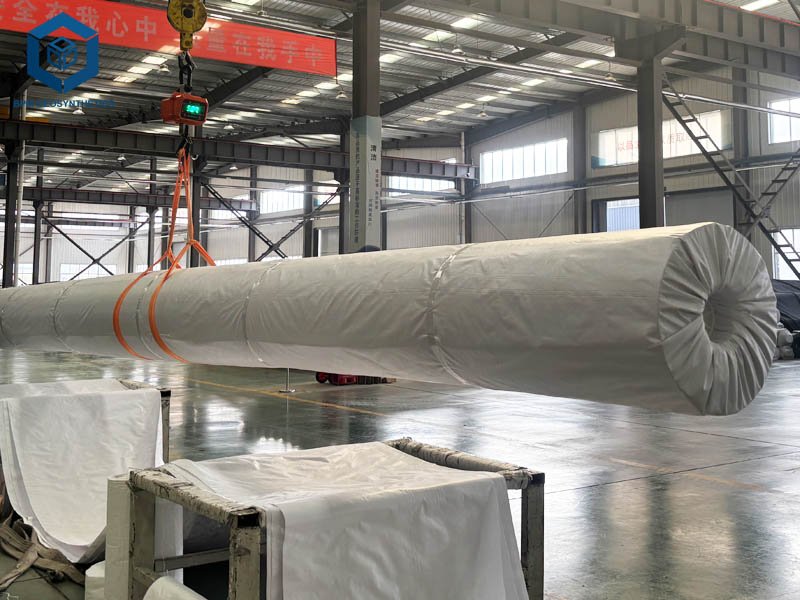
5. Buying Advice for the Best Geomembranes and Geotextiles for Earth Reinforcement
Combined System Selection
Choose HDPE geomembrane for impermeability + nonwoven geotextile for puncture protection/separation; 1.0–2.0 mm HDPE + 300–400 g/m² geotextile for most slopes/walls.
Strength & Puncture Priority
Tensile ≥25 kN/m and puncture ≥400 N for rough fill; higher for rocky subgrades.
Installation Best Practices
Smooth subgrade, geotextile cushion, proper welding (hot wedge/extrusion), 100% non-destructive testing, 95% compaction.
Durability & Lifespan
Carbon black 2–3%; stress crack >1,000 hours; 50–100+ year life with proper cover.
Cost & Project Savings
$1.0–$5.0/m² combined; expect 20–50% fill savings, 20–50% cost reduction vs concrete.
Customization for Large Projects
OEM/ODM (BPM Geomembrane) for custom thickness, roll sizes — optimizes large slope/wall designs.
6. Final Thoughts
The top 6 geomembranes and geotextiles for earth reinforcement of 2026 combine impermeability, strength, and durability for stable, cost-effective slopes and walls. BPM Geomembrane’s Smooth HDPE Liner paired with nonwoven geotextile stands out for consistent quality, performance, and value in MSE and reinforced slope projects.
Invest in reliable geosynthetic systems for long-lasting earth reinforcement — contact suppliers like BPM Geomembrane for specifications, design support, samples, and quotes.


