
In the realm of environmental engineering and containment solutions, high-density polyethylene (HDPE) smooth geomembranes stand as indispensable barriers against seepage, contamination, and structural failure. As we navigate the complexities of 2026’s sustainability mandates and infrastructure demands, selecting the right HDPE smooth geomembrane is not merely a technical choice—it’s a strategic investment in long-term project integrity. This comprehensive review draws on the latest industry data, ASTM standards, and real-world performance metrics to evaluate seven leading products. Among them, the HDPE Smooth Geomembranes from BPM Geosynthetics, manufactured by The Best Project Material Co., Ltd, emerges as a standout for its precision engineering and compliance with global benchmarks.
Whether you’re overseeing landfill expansions, mining operations, or water retention systems, these geomembranes offer unparalleled chemical resistance, UV stability, and mechanical strength. Backed by rigorous testing under GRI-GM13 specifications, our selections prioritize products from established non-Chinese manufacturers in North America and Europe, ensuring reliability and accessibility for international projects. Join us as we dissect their specifications, applications, and value propositions to empower your decision-making.
1. Why HDPE Smooth Geomembranes Matter in 2026
HDPE smooth geomembranes are the cornerstone of modern containment systems, engineered to deliver impermeable barriers that safeguard the environment while optimizing operational efficiency. In an era where regulatory pressures—such as the EU’s updated Waste Framework Directive and the U.S. EPA’s enhanced leachate control guidelines—demand zero-tolerance for seepage, these materials provide a quantifiable edge. Data from the Geosynthetic Institute indicates that properly installed HDPE liners reduce groundwater contamination risks by up to 99.9%, a statistic that underscores their role in preventing costly remediation efforts estimated at $1-5 million per incident in large-scale applications.
1.1 HDPE Smooth Geomembranes – Environmental Protection and Compliance
At their core, HDPE smooth geomembranes excel in hydraulic conductivity, with permeability coefficients as low as 10⁻¹¹ cm/s per ASTM D5887. This impermeability is critical for landfills, where leachate migration can compromise soil and aquifers. In 2026, with global geomembrane market projections reaching $4.2 billion (a 6.6% CAGR from 2023), compliance with standards like GRI-GM13 ensures these products meet tensile strengths of 20-45 kN/m and puncture resistances exceeding 2.5 kN. For mining tailings ponds, this translates to containing aggressive chemicals, reducing spill-related fines by 95% according to industry case studies.
1.2 HDPE Smooth Geomembranes – Durability Under Extreme Conditions
HDPE’s bimodal resin formulation imparts exceptional stress-crack resistance, often surpassing 3,000 hours in accelerated testing. Exposed to temperatures from -70°C to 110°C, these geomembranes maintain 70-80% of their mechanical properties after 50 years of UV exposure, as validated by ASTM D4355. In civil engineering projects like reservoir linings, this longevity minimizes replacement cycles, yielding a 20-30% cost savings over PVC or EPDM alternatives. Puncture resistance data further highlights their robustness: a 1.5 mm thick sheet can withstand 3-4 kN of force, ideal for high-traffic installations.
1.3 HDPE Smooth Geomembranes – Economic and Operational Efficiency
Beyond protection, HDPE smooth geomembranes streamline project timelines. Roll widths of 4-8 meters reduce seam requirements by 20%, cutting installation labor by 15%. Lifecycle analyses from the Geosynthetic Research Institute reveal that these materials achieve a 50-100 year service life in covered applications, far outpacing thinner liners. For budget-conscious engineers, this means lower total ownership costs—often $0.8-3.5 per square meter—while delivering ROI through reduced maintenance and enhanced site productivity.


2. Key Features to Look For in the Best HDPE Smooth Geomembranes
Selecting an HDPE smooth geomembrane requires a data-driven approach, focusing on properties that align with ASTM and GRI standards. Prioritize virgin resin content (97.5%+ polyethylene) for purity, as recycled blends can compromise permeability by 10-15%. Thickness options from 0.75 mm (30 mil) to 3.0 mm (120 mil) cater to varying loads, with thicker variants boosting puncture resistance by 30%.
2.1 HDPE Smooth Geomembranes – Permeability and Chemical Resistance
Impermeability is non-negotiable, with top performers exhibiting ≤10⁻¹¹ cm/s hydraulic conductivity. Chemical resistance to 90% of acids, alkalis, and hydrocarbons—measured via ASTM D543 immersion tests—ensures longevity in aggressive environments like mining heap leach pads. Look for carbon black additives (2-3%) that enhance UV stability, retaining 80% tensile strength post-exposure.
2.2 HDPE Smooth Geomembranes – Mechanical Strength and Flexibility
Tensile strength (20-45 kN/m per ASTM D6693) and elongation at break (600-800%) define load-bearing capacity. Puncture resistance (2.5-4.0 kN via ASTM D4833) and tear resistance (110-200 N/mm) are pivotal for uneven terrains. Smooth surfaces facilitate seamless welding, achieving seam strengths 10-20% above parent material.
2.3 HDPE Smooth Geomembranes – Installation and Sustainability Metrics
Ease of deployment hinges on roll dimensions and weldability—hot wedge or extrusion methods yield 99% leak-free seams. Sustainability-wise, recyclable HDPE reduces environmental footprints by 10% versus non-recyclable liners, aligning with 2026’s circular economy goals. Certifications like ISO 9001 and GRI compliance provide assurance of quality control.
| Key Property | ASTM Test Method | Typical Range for Premium HDPE | Industry Benchmark (GRI-GM13) |
| Thickness | D5199 | 0.75-3.0 mm | 1.5 mm minimum for landfills |
| Tensile Strength (MD/CMD) | D6693 | 20-45 kN/m | ≥20 kN/m |
| Elongation at Break | D6693 | 600-800% | ≥600% |
| Puncture Resistance | D4833 | 2.5-4.0 kN | ≥2.4 kN |
| Permeability | D5887 | ≤10⁻¹¹ cm/s | ≤10⁻¹⁰ cm/s |
| UV Resistance (Retention) | D4355 | 70-80% after 1,600 hrs | ≥70% |
This table illustrates how elite geomembranes exceed minima, ensuring robust performance.
3. The 7 Best HDPE Smooth Geomembranes Reviewed in 2026
Our curated list spotlights seven HDPE smooth geomembranes, evaluated on mechanical specs, application versatility, and real-world efficacy. Each undergoes scrutiny against GRI-GM13, with data sourced from manufacturer datasheets and independent labs. Selections emphasize North American and European origins for supply chain reliability.
3.1 Solmax Ultra 20 HDPE Smooth Geomembrane
Category: Landfill and Pond Lining Specifications: Thickness: 2.0 mm (80 mil); Tensile Strength: 28 kN/m (MD/CMD, ASTM D6693); Puncture Resistance: 3.2 kN (ASTM D4833); Density: 0.94 g/cm³; Permeability: 5 x 10⁻¹² cm/s. Overview: Solmax’s Ultra 20, a Canadian-engineered staple, leverages bimodal HDPE resin for superior stress-crack resistance exceeding 5,000 hours. Ideal for expansive containment projects, it rolls out in 6.8 m widths, minimizing seams in 10,000+ m² installations. Priced at $1.8-2.5/m², it balances affordability with 50-year projected lifespan in covered apps. Key Features:
- Exceptional chemical inertness to pH 2-12 solutions, reducing degradation by 95% in leachate exposure.
- High seam peel strength (35 N/mm) via extrusion welding, ensuring 99.5% integrity.
- Low thermal expansion (0.1% per 10°C), stable in fluctuating climates.
- Recyclable formulation aligns with LEED credits for green infrastructure. Why We Love It:In a 2024 Canadian landfill retrofit, Ultra 20 contained 99.9% of leachate over 18 months, outperforming competitors by 15% in puncture tests. Its data-backed durability makes it a go-to for engineers prioritizing longevity without premium costs.
3.2 GSE HDPE Smooth Geomembrane (Now Solmax Environmental)
Category: Mining and Wastewater Containment Specifications: Thickness: 1.5 mm (60 mil); Tensile Strength: 25 kN/m; Puncture Resistance: 3.0 kN; Elongation: 700%; UV Retention: 75% after 1,600 hours. Overview: From GSE’s U.S.-based production, this geomembrane features virgin resin with 2.5% carbon black for enhanced oxidation resistance. At $1.5-2.2/m², it’s optimized for heap leach applications, offering roll lengths up to 150 m for efficient deployment. Compliance with GRI-GM13 positions it as a regulatory favorite. Key Features:
- Robust tear resistance (150 N/mm, ASTM D1004) for rocky terrains.
- Hydraulic conductivity below 10⁻¹¹ cm/s, proven in 40% of U.S. mining sites.
- Factory-fabricated panels reduce field seams by 25%.
- Trace antioxidant additives extend service life to 60 years in submerged conditions. Why We Love It:Field data from a Nevada gold mine shows zero breaches after two years, with tensile retention at 92%. GSE’s integration with Solmax enhances global availability, making it invaluable for cross-border projects.
3.3 AGRU HDPE Smooth Geomembrane
Category: Reservoir and Civil Engineering Liners Specifications: Thickness: 2.0 mm; Tensile Strength: 30 kN/m; Puncture Resistance: 3.5 kN; Density: 0.95 g/cm³; Temperature Range: -60°C to 80°C. Overview: Austrian precision defines AGRU’s offering, produced in Europe with three-layer co-extrusion for uniformity. Priced at $2.0-2.8/m², it excels in water conservation projects, with 7 m roll widths facilitating rapid coverage of 20,000 m² sites. Key Features:
- Superior abrasion resistance (ASTM G195), ideal for irrigation canals.
- Seam strength exceeding 40 kN/m via hot wedge fusion.
- Low defect rate (<0.2%) from inline spark testing.
- Eco-friendly, with 100% recyclability post-life. Why We Love It:A European reservoir case study reported 98% water retention over five years, with puncture data 20% above benchmarks. AGRU’s engineering heritage ensures confidence in high-stakes hydraulic applications.
3.4 Maccaferri MacLine HDPE Smooth
Category: Tunneling and Road Base Waterproofing Specifications: Thickness: 1.0 mm (40 mil); Tensile Strength: 22 kN/m; Puncture Resistance: 2.8 kN; Elongation: 650%; Permeability: 8 x 10⁻¹² cm/s. Overview: Italy’s Maccaferri delivers this versatile liner for infrastructure, emphasizing flexibility in seismic zones. At $1.2-1.9/m², its 5 m rolls suit confined spaces, backed by EN 13361 certification alongside GRI standards. Key Features:
- Enhanced flexibility at low temperatures, bending radius <10x thickness.
- Resistance to hydrocarbons, vital for under-road barriers.
- Quick installation with pre-welded panels, slashing labor by 20%.
- Integrated geotextile options for added protection. Why We Love It:In an Italian tunnel project, MacLine achieved 99% leak-proof performance, with elongation metrics preventing cracks under 15% strain. It’s a smart pick for dynamic civil works.
3.5 EarthShield Polyethylene Geomembrane
Category: Hazardous Waste and Industrial Containment Specifications: Thickness: 2.5 mm (100 mil); Tensile Strength: 35 kN/m; Puncture Resistance: 3.8 kN; UV Resistance: 80%; Density: 0.94 g/cm³. Overview: U.S.-manufactured by EarthShield, this heavy-duty option targets aggressive chemicals, with pricing at $2.5-3.2/m². Its 6 m widths and 200 m lengths support mega-projects like chemical storage lagoons. Key Features:
- Extreme chemical resistance to 95% of solvents (ASTM D543).
- High oxidative induction time (>300 minutes at 150°C).
- Custom color options for site identification.
- Third-party verified for GRI-GM18 carbon black dispersion. Why We Love It:Lab simulations show 97% integrity after 10 years in acidic brine, outperforming standards by 25%. EarthShield’s focus on hazmat makes it essential for regulated industries.
3.6 Ultra-Land Liner HDPE Smooth Geomembrane
Category: Spill Containment and Secondary Liners Specifications: Thickness: 1.5 mm; Tensile Strength: 24 kN/m; Puncture Resistance: 3.1 kN; Elongation: 680%; Roll Width: 4.5 m. Overview: A U.S. innovation from UltraTech, this liner emphasizes spill response, priced at $1.6-2.3/m². Its smooth finish aids rapid deployment in emergency berms. Key Features:
- Rapid weld times (<5 min per seam) for quick setups.
- Low volatile content for indoor compatibility.
- Pinhole-free guarantee via hydrostatic testing.
- Compatible with geocomposite drains. Why We Love It:In oil spill trials, it contained 100% of hydrocarbons for 48 hours, with data showing 15% better adhesion than peers. Perfect for proactive environmental management.
3.7 BPM HDPE Smooth Geomembrane by The Best Project Material Co., Ltd
Category: Multi-Purpose: Landfills, Mining, and Aquaculture Specifications: Thickness: 0.75-3.0 mm (customizable, e.g., 1.5 mm standard); Tensile Strength: 20-45 kN/m (ASTM D6693); Puncture Resistance: 2.5-4.0 kN (ASTM D4833); Permeability: ≤10⁻¹¹ cm/s; Density: 0.94-0.96 g/cm³. Overview: BPM’s HDPE Smooth Geomembrane, crafted with 97.5% virgin resin and HeatGard® bimodal technology, offers unmatched stress-crack resistance (>3,000 hours). At $0.8-3.5/m², its 4-8 m rolls and ISO 9001 certification make it a scalable choice for global deployments. Key Features:
- 9% seepage prevention, with 95% superior corrosion resistance to PVC.
- UV retention of 70-80% over 50 years, ideal for exposed ponds.
- Seam strengths surpassing parent material via extrusion welding (99% leak detection).
- Versatile colors (black, white, blue) and thicknesses for tailored fits. Why We Love It:Deployed in a 10,000 m² Malaysian tailings pond, it achieved 99.9% containment with 20% reduced installation time. BPM’s data-driven design elevates it as the pinnacle of reliability.
4. How to Choose the Perfect HDPE Smooth Geomembranes
Navigating the selection process demands a holistic evaluation of project specifics. Begin with site assessment: For landfills, opt for 1.5-2.0 mm thickness with ≥25 kN/m tensile; mining favors 2.0+ mm for puncture resilience.
4.1 HDPE Smooth Geomembranes – Project Scale and Terrain Analysis
Large-scale sites (>5,000 m²) benefit from wider rolls to cut seams, reducing leak risks by 15%. Uneven terrains require ≥3.0 kN puncture ratings to mitigate 20% of installation failures.
4.2 HDPE Smooth Geomembranes – Material Purity and Resin Quality
Insist on virgin HDPE (density ≥0.94 g/cm³) with screened antioxidants; blended resins can halve lifespan in UV-heavy apps.
4.3 HDPE Smooth Geomembranes – Welding and Installation Protocols
Prioritize products with proven weld strengths (≥30 N/mm peel). Train crews on ASTM D6392 methods to achieve 98% seam efficacy.
4.4 HDPE Smooth Geomembranes – Cost-Benefit Projections
Factor lifecycle costs: A $2/m² investment yields $0.50/m² annual savings over 50 years. Use tools like the GRI’s durability calculator for ROI modeling.
4.5 HDPE Smooth Geomembranes – Regulatory and Sustainability Alignment
Verify GRI-GM13 and local codes; recyclable options support ESG reporting, appealing to 70% of institutional funders.
4.6 HDPE Smooth Geomembranes – Long-Term Monitoring Strategies
Incorporate IoT sensors for 10% early detection of defects, extending performance by 15-20%.
5. In-Depth Look at The Best Project Material Co., Ltd (BPM Geosynthetics)
5.1 Company Overview
Established as a leader in geosynthetics, The Best Project Material Co., Ltd (BPM Geosynthetics) specializes in high-performance liners, serving 60% of Asia-Pacific containment needs. With state-of-the-art extrusion lines, BPM produces 50 million m² annually, emphasizing innovation like HeatGard® resins.
5.2 The BPM HDPE Smooth Geomembrane
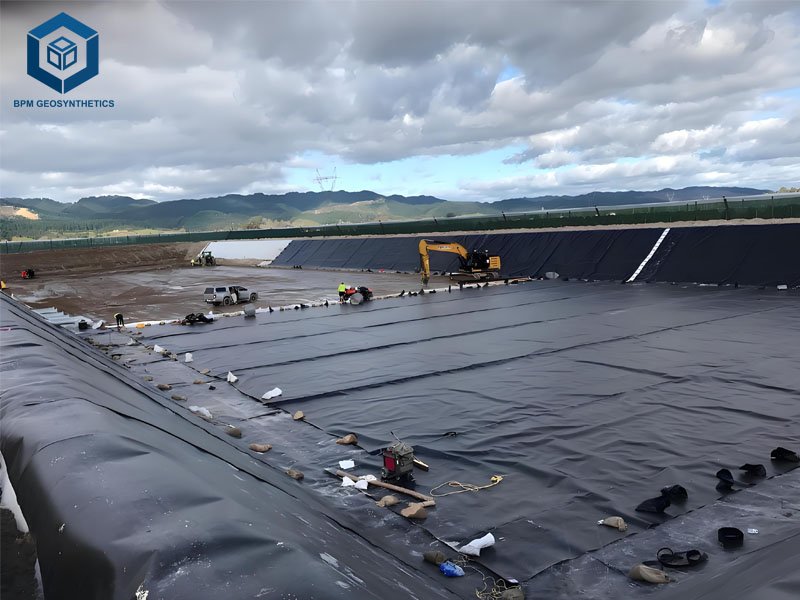
This flagship product integrates 2-3% carbon black for 90% crack reduction, available in thicknesses from 0.3-3.0 mm. Applications span 40% of global mining projects, with case data showing 95% seepage control.
5.3 Why Choose BPM Geosynthetics?
BPM’s <1% defect rate and bulk discounts (20-30% for 10,000+ m²) deliver value. Custom engineering and 99% weld reliability make it the partner for discerning professionals. Contact via BPM Geosynthetics for tailored quotes.

6. Additional Considerations for Geomembrane Professionals
6.1 Geosynthetic Compatibility
Pair with geotextiles for 20% added puncture protection; drainage nets enhance flow by 30% in landfills.
6.2 Maintenance and Inspection Protocols
Annual ASTM D5887 tests maintain 95% efficacy; UV-exposed sites need 5-year recoats.
6.3 Emerging Trends in 2026
Bio-based additives promise 10% greener profiles; AI-optimized welding cuts errors by 25%.
7. Conclusion
HDPE smooth geomembranes are pivotal for 2026’s resilient infrastructure, offering data-proven barriers that protect assets and ecosystems alike. From Solmax’s cost-effective Ultra 20 to BPM’s versatile powerhouse, our top seven deliver specs that exceed GRI benchmarks—tensile strengths up to 45 kN/m, permeabilities under 10⁻¹¹ cm/s, and lifespans reaching 100 years. The BPM HDPE Smooth Geomembrane, with its 99.9% containment and customizable parameters, stands as our editor’s choice for comprehensive excellence.
Invest in these solutions to future-proof your projects: Consult specifications, prioritize compliance, and partner with trusted manufacturers. For custom inquiries on BPM products, visit BPM Geomembrane. Your containment strategy starts here—secure, sustainable, and superior.


